
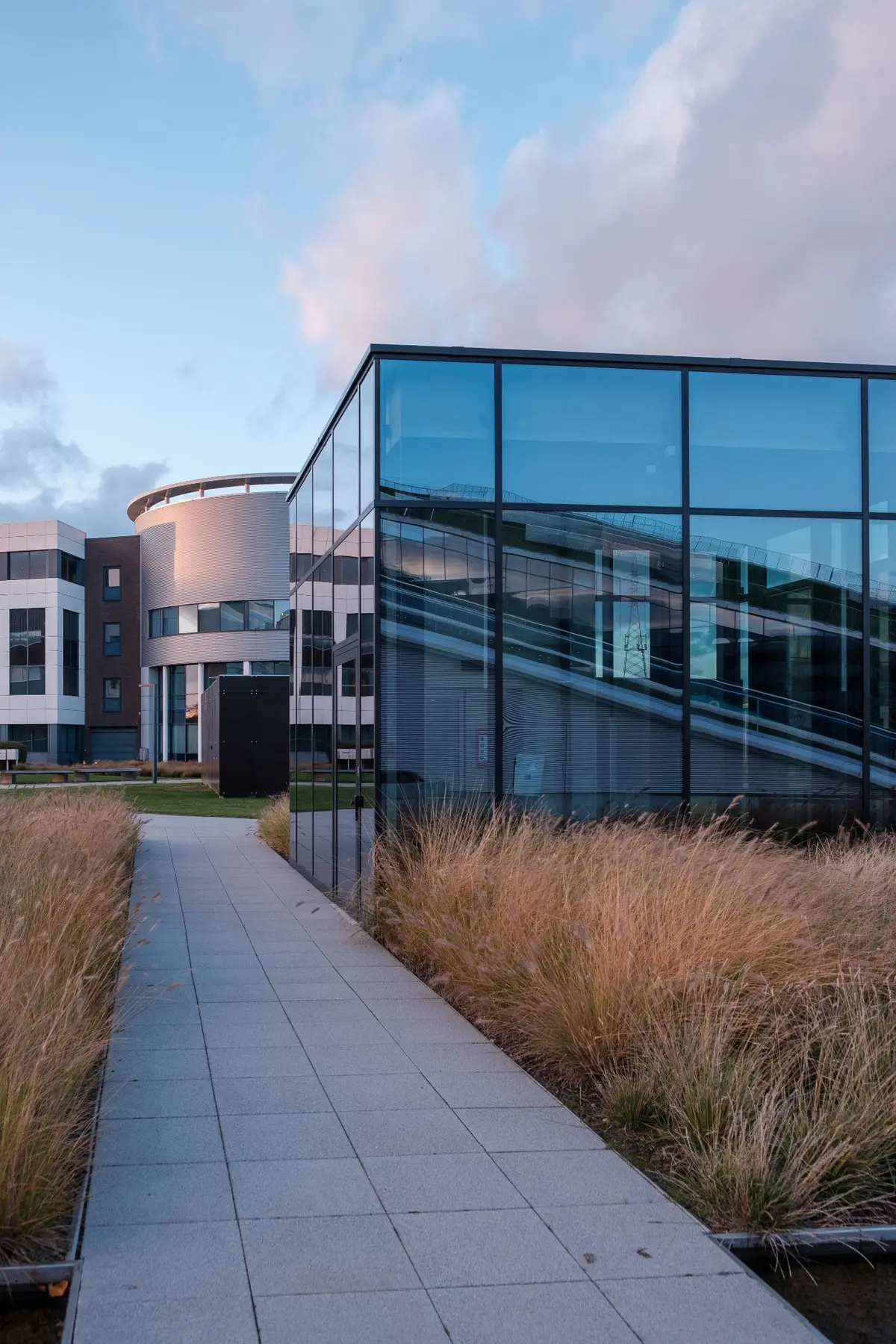
Large contemporary facility with a glass entrance and architectural window wall
Facilities + specified assemblies

Specialty glazing for occupied sites, public buildings, and complex applications.

Document-led installation, renewal, and urgent service for healthcare, education, government, recreation, transportation, institutional, and selected industrial environments.

Higher-use environments

Facility work calls for exact products, disciplined sequencing, and fewer assumptions.

Hospitals, nursing homes, schools, libraries, public offices, transit properties, sports venues, and industrial facilities may stay active while glazing work proceeds. Heavy traffic, controlled access, documented specifications, rated openings, and communication with several stakeholders can all shape the method.

AMS brings more than eight years of experience to new installations, modernization programs, planned renewals, and urgent conditions across Toronto, the GTA, surrounding areas, and applicable projects elsewhere in Ontario. The team can manage the glazing portion from drawing review to permanent installation.

Facility operations teamsHealthcare and education clientsPublic-sector project leadsInstitutional contractorsIndustrial site representatives
Facility-focused capabilities

Specified glass, doors, openings, and architectural assemblies for demanding properties.

01

Institutional windows & entrances

High-use openings are assessed for glazing condition, weather performance, security, movement, closure, and the practical needs of an occupied property.

  • Healthcare, long-term-care, and medical sites
  • Schools, libraries, and educational buildings
  • Government, transit, recreation, and entertainment facilities
  • Sliding, fixed, and crank windows plus glass-and-aluminum doors
02

Rated doors, frames & glazing

Products for a rated assembly at an exterior opening or along a designated entry or exit route must follow its documented design, certification, and project requirements; wired glass or a metal frame alone does not establish a rating.

  • Specified metal doors and frame components
  • Hinge correction and self-closing operation
  • Locks and associated opening hardware
  • Fire-rated wired glazing where expressly required
03

Curtain wall & institutional façades

Exterior envelope work is coordinated against system drawings, field dimensions, interfaces, access conditions, and the order in which panels and surrounding work can proceed.

  • New and retrofit curtain wall assemblies
  • Architectural and punched-window systems
  • Panel, insulated-unit, and component replacement
  • Estimating, engineering, material purchasing, and field installation
04

Architectural & overhead systems

Complex building features may range from one custom element to a broad interior or exterior glass package.

  • Skylights, overhead glazing, canopies, and sunshades
  • Entrances, lobbies, and glazed vestibules
  • Partitions, feature walls, floors, and stairs
  • Guards, balustrades, and specialty railing applications
05

Performance & specialty glass

Glass is selected for the actual combination of visibility, safety, insulation, privacy, appearance, and stated technical criteria.

  • Tempered and laminated safety products
  • Insulated and spandrel configurations
  • Frosted, privacy, and bird-friendly treatments
  • Specified fire-rated wired or custom-cut architectural panes
06

Facility doors, windows & hardware

Recurring operating trouble often involves several connected parts, so the assessment covers the complete opening and not only the visibly damaged item.

  • Multiple-window and entrance renewal
  • Broken doors and selected locking problems
  • Rollers, tracks, handles, hinges, cranks, and closers
  • Leakage, drafts, sealant failure, fogging, and alignment
  • Black, nickel, chrome, gold, matte, or custom finish options
07

Industrial & building retrofit work

Selective modernization can extend serviceability where glazing units, aluminum, sealants, or operating parts have deteriorated across a warehouse or facility.

  • Aging insulated glass and recurring condensation
  • Corroded components and worn mechanisms
  • Exterior openings, doors, and architectural panels
  • Condition-based repair in place of unnecessary wholesale replacement
08

Urgent response & planned renewal

Immediate safety needs and long-range asset planning require different schedules, but both benefit from a documented route to a durable final repair.

  • Compromised glass, doors, windows, and entrances
  • Custom fabrication and sealed-unit ordering
  • Interim coordination followed by permanent work
  • Programs for aging units, sealants, corrosion, and repeat defects
Specification-led execution

Keep the facility functioning while the glazing package advances.

AMS works with facility managers, builders, consultants, and contractors to reconcile drawings, quantities, approved products, procurement, access controls, safety measures, site activity, and trade interfaces.

Share the specification package
  • 01Audit documents and opening schedules
  • 02Confirm rated or engineered criteria before ordering
  • 03Coordinate specialized materials and long-lead hardware
  • 04Plan work zones within occupied or controlled sites
  • 05Complete installation against the recorded project requirements
Technical glazing context

Terms worth clarifying on institutional and specialty work.

System names describe categories, not universal solutions; the approved design and application govern the required components.

How are storefront and curtain wall systems distinguished?

Storefront framing is often used for lower-level entrances and commercial bays. Curtain wall generally covers larger areas of the exterior envelope and is engineered for a different set of loads, drainage paths, interfaces, and performance conditions.

What is structural glazing?

The term describes engineered methods that retain glass with specialized structural components so it participates in the appearance and behaviour of a façade or assembly. The exact design is proprietary or project-specific and must follow engineering and manufacturer criteria.

What qualifies as safety glass?

Safety glazing is manufactured to reduce injury risk when impacted or broken. Tempered and laminated products are common examples, but the proper type, thickness, and configuration depend on where and how it will be used.

When is fire-rated glazing appropriate?

It is used only where the building design and approved documentation call for a rated opening or assembly. Glass, frame, door, hardware, labels, installation details, and required rating must be compatible and verified together.

What role does curtain wall play at a large facility?

It creates a lightweight, non-load-bearing exterior enclosure that manages separation from weather while transferring applicable loads back to the building structure. Individual systems vary, so drawings and specifications remain essential.